|
|
|
|
|
Georgia CTSA
Weekly eRoundup
October 16, 2026
|
|
|
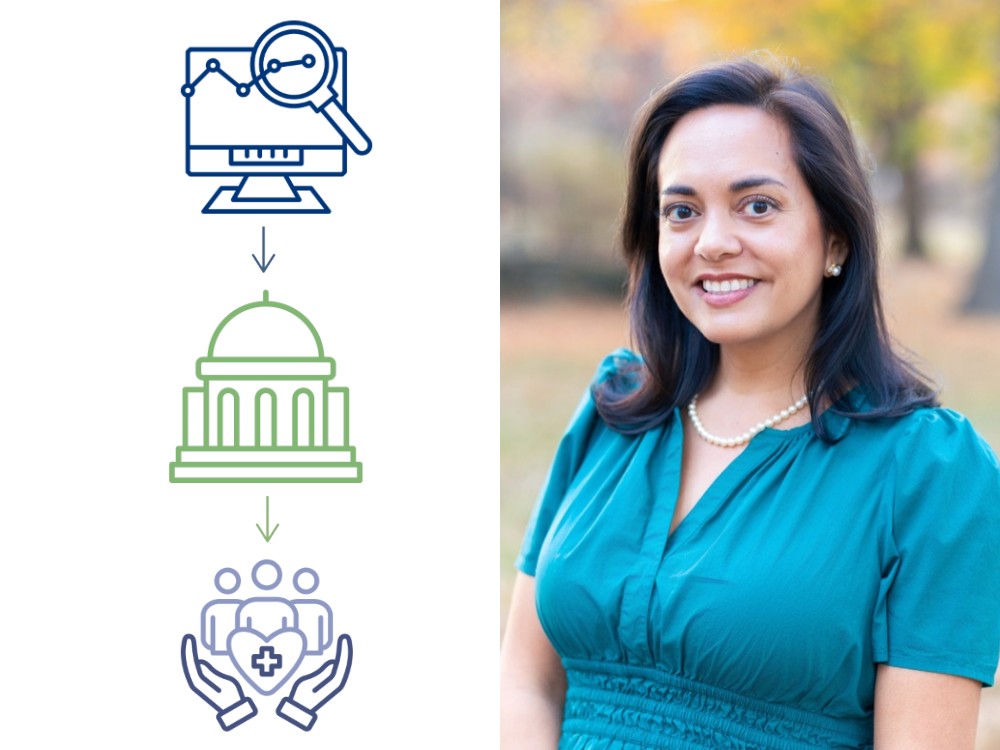
Measuring Policy Impact to Connect Clinical Research to Community Health
“Overton is one of the valuable bibliometric tools that the Georgia CTSA uses to evaluate the impact of clinical and translational research,” says Nikki Llewellyn, PhD, Associate Director, Evaluation & Continuous Improvement. “With Overton, we can access documented links between research publications and policy literature. This reveals who is using the research we have supported to guide health policy and how they are using it to improve health.”
|
|
|
|
|
Waiting for Godot in Healthcare AI: Part II
The struggle for AI business sector supremacy leaves even the powerful EHR duopoly and their big U.S. health system customers waiting — and patients making do. Concentrating markets hear the fervent calls for “more government regulation,” another “oversight committee," a scientific “moratorium”, but they do not respond. So regulatory oversight must be applied to protect the consumer from unfairly high prices and/or unsafe goods and services.
|
|
|
|
|
Association of Clinical and Translational Science TS27 Awards - Due November 18
ACTS invites you to recognize the outstanding contributions of the investigators and educators you work with by submitting a nomination for the Translational Science 2027 Awards.
|
|
|
|
|
|
Funding (*New Opportunities)
|
|
|
Emory/Georgia TRAC Pilot Grants & Bridge Funding - Open from October 19-October 30
Applications are open for the Tuberculosis Research Advancement Center (TRAC) Bridge Award and TRAC Accelerator Awards. This funding aims to mitigate the effects of federal funding cuts on TB investigators through helping investigators complete and publish partially completed aims and sub-aims where feasible, pivot to new areas of TB-related research, develop new collaborations, and generate preliminary data for future grant applications. TRAC Bridge Award RFA. Accelerator Award RFA.
|
|
|
|
|
NIH: Model-to-Clinic (M2C) for Precision Medicine with AI: Integrating Imaging with Multimodal Data - Due October 19
The purpose of this program is to catalyze the translation of AI-enabled, image-centered, multimodal CDS tools, developed as Software as a Medical Device, from training and testing of prototypes towards clinical applications that address unmet health challenges in precision medicine. These projects are expected to have high potential for demonstrable, positive impact on patient outcomes and/or healthcare processes.
|
|
|
|
|
NIH Advanced Development of Informatics Technologies for Cancer Research and Management - Apply by October 19
This program invites applications to enhance and disseminate emerging, user-friendly informatics technologies that support a wide range of cancer research, including discovery biology, population studies, and clinical and translational research.
|
|
|
|
|
American Academy of Allergy, Asthma & Immunology Drug Hypersensitivity Research Grant - Due October 27
This funding opportunity aims to support research grant(s) to advance the state of knowledge, develop novel techniques, agents, methodologies, models, or applications that could have a significant impact on drug hypersensitivity research. This funding mechanism is designed to further research drug allergy/hypersensitivity for individuals with a current or future focus in drug hypersensitivity research.
|
|
|
|
|
ARPA-H Emerging Health Innovators Initiative - Solution Summary - Due October 30 (Full Proposal Due 2/10)
This opportunity supports early-career investigators pursuing bold, high-impact research addressing important health challenges, with an emphasis on revolutionary rather than incremental advances. The portfolio spans 16 technical topic areas, including AI, bioengineering, neuroscience, cancer, women’s health and inflammation.
|
|
|
|
|
NIH GREGoRi Innovation Projects (U01 Clinical Trial Optional) - Due October 30
The Genomics Research to Elucidate the Genetics of Rare Diseases:innovation (GREGoRi) initiative seeks to accelerate a paradigm shift in rare disease diagnosis. This funding is intended to stimulate the development and testing of highly innovative experimental or computational approaches for rare disease diagnosis that have the potential to make transformative improvements to the current state of the art.
|
|
|
|
|
Lupus Foundation of America Mini Grant Opportunity for Patient-Facing Organization - Due November 1
LFA invites applications for the CHW Mini-Grant Program, which funds organizations that use community health workers, community health representatives, patient navigators, or similar staff to support people with lupus. Projects will run from December 1, 2026, to July 31, 2027.
|
|
|
|
|
NIAID Clinical Trial Implementation Cooperative Agreement (U01 Clinical Trial Required) - Due November 5
Are you planning a clinical trial that could advance the prevention, diagnosis, or treatment of infectious, immunologic, or allergic diseases? This opportunity supports hypothesis-driven clinical trials that align with NIAID's research mission and address high-priority scientific questions. This NOFO provides funding for projects of up to five years, with the possibility of six- or seven-year project periods for studies with a strong scientific rationale and clearly defined milestones.
|
|
|
|
|
* NIH Pilot Projects to Enhance the Human Virome Program (HVP) - Due November 10
The goal of HVP is to study the human virome and its functions not linked to known disease. The program will also develop tools, models, and methods to better understand what viruses are present, how they differ from person to person, how they relate to human biology, and how they may influence health. Applications are due November 10 by 5 PM local time of the applicant organization.
|
|
|
|
|
NIH Early-Stage Innovative Technology Development for Basic and Clinical Cancer Research - Due November 10
The NCI is seeking grant applications proposing to develop innovative technologies offering new capabilities for the molecular or cellular characterization of cancer or for improved handling and quality control of biospecimens for basic, clinical, or epidemiological cancer research.
|
|
|
|
|
* NIH Cellular Senescence Network (SenNet) Program - Due November 23
SenNet’s overall goal is to identify and characterize senescent cells across the body, across various states of human health, and across the lifespan. In phase 2, SenNet aims to define tissue-specific types of senescent cells and their associated biological functions with the goal of guiding therapeutic strategies to develop new, innovative tools and technologies collected from phase 1.
|
|
|
|
|
ECHO Program's Dissertation Grant - Due December 2
The goal of the Dissertation Grant (R36) is to support doctoral candidates studying applicable areas of child health for the completion of their doctoral dissertation research project. The awards resulting from this funding opportunity will provide students working on dissertations with the opportunity to study child health outcomes through the secondary analyses of ECHO’s large longitudinal datasets within a controlled-access NIH data repository. Applications are due by December 2 for RFA-OD-27-008.
|
|
|
|
|
Georgia Tech IBB Center-type Proposal Team Seed Grant Program - Due December 31
The Seed Grant Program was created to bring IBB teams together to plan and submit large center-type proposals. This competition is a rolling submission, and the committee will select up to four awards per fiscal year, each for $5,000. Please note that all collaborators must be IBB faculty members who hold regular appointments at Georgia Tech.
|
|
|
|
|
* NIH Real-World Evidence Innovation Challenge - Register by February 2
NIH through NCATS has launched the Real-World Evidence Innovation Challenge, a national prize competition designed to establish validated benchmarks for analytic methods operating on real-world clinical data. The total prize purse for the Challenge is up to $6,000,000, inclusive of all phases. This competition is open to clinically meaningful real-world evidence questions, with priority areas including cancer, kidney disease, and pediatrics. Participants must register by February 2. A technical assistance webinar will be held on February 16, and complete Phase 1 submissions are due by March 26 at 5 PM ET.
|
|
|
|
|
NIH Summer Internship Program - Apply by January 26
This opportunity offers paid summer research opportunities for community college, college, graduate, and professional school students across NIH campuses, including the main campus in Bethesda, Maryland. Applications are due January 26 at noon.
|
|
|
|
|
NIH Early Career Reviewer (ECR) Program
Early career researchers are invited to participate in NIH’s ECR Program. This program aims to help early career scientists become more competitive as grant applicants through first-hand experience with peer review and to enrich CSR’s pool of trained reviewers in terms of experience and other merit-based factors.
|
|
|
|
|
Georgia CTSA K12 (formerly KL2) Clinical and Translational Research Career Development Program - Apply by February 1
Georgia CTSA K12 Program supports early-career faculty investigators (MD, PhD, MD/PhD, or PharmD) who are pursuing careers in clinical and translational research and clinical and translational science (CTS). The program provides personalized career development to become innovative translational scientists and leaders of multidisciplinary CTS research teams. Apply by February 1.View Flyer
|
|
|
|
|
Georgia CTSA T32 Predoctoral and T32 Postdoctoral (formerly TL1) Programs - Apply by February 15 (Application Workshop 10/29)
The Georgia CTSA T32 Predoctoral and T32 Postdoctoral Programs (formerly TL1 program) provide predoctoral and postdoctoral trainees at Georgia CTSA partner institutions with outstanding opportunities for training in clinical and translational science and clinical and translational research. The program prepares the next generation of translational scientists. Register for Application Workshop on 10/29. Apply by February 15. Read Announcement.
|
|
|
|
|
Georgia CTSA Resources and Support Programs Guide
Are you a research investigator with an appointment at Emory, MSM, Georgia Tech, or UGA? This resource guide is for you! Take a look at the broad range of Georgia CTSA resources and support programs available including consult offerings, clinical/translational research & clinical trials, innovation & entrepreneurship, education & career development, grant writing, funding, collaboration, team science, databases, conferences, and more.
|
|
|
|
|
|
Innovation and Translation
|
|
|
Georgia Tech Bioengineering Seminar - October 29
From 11:00 AM to noon, Georgia Tech IBB and the Wallace H. Coulter Department of Biomedical Engineering will be hosting its Bioengineering Seminar featuring Hyongsok Tom Soh, W. M. Keck Foundation Professor of Electrical Engineering Professor of Radiology (Diagnostic Sciences Laboratory) and of Bioengineering Stanford University. Soh's research interests are in analytical biotechnology, especially in high-throughput screening, directed evolution, and integrated biosensors.
|
|
|
|
|
Biolocity 2027-2028 Call for Applications - Apply by December 4
Innovators from Georgia Tech and Emory are invited to apply for the opportunity to take their biomedical discoveries from the lab toward real-world impact. Teams accepted into the annual cohort can receive up to $250,000 in non-dilutive funding, along with mentorship, project management, and commercialization support designed to help bridge the gap from lab to market.
|
|
|
|
|
Team Science Skill Series: Conflict - TODAY! October 16 Join Georgia CTSA via Zoom from 12:00-1:00 PM. This workshop will include facilitated discussions on different conflict styles and how to align the right style as the situation calls for it. Theories and best practices will be emphasized throughout the session, covering topics related to teamwork and conflict management. View Flyer.
|
|
|
|
|
NIH R01 Proposal Development Academy - Mondays thru November 16
In partnership with Emory Research, the Georgia CTSA is hosting this eight-week proposal development academy via Zoom to orient researchers to the NIH R01 award. This program will review the core components of R01 applications, provide advice for structuring proposals, and demystify the review process. Courses will take place via Zoom on Mondays from noon to 1 PM through November 16. View Flyer.
|
|
|
|
|
Exploring Environmental Health Partnerships: Emory and MSM - October 19
Join faculty, staff, and students from Emory and MSM to explore opportunities for collaboration in environmental health from 9 AM to noon at the Rollins School of Public Health (R. Randall Rollins Building, RM800).
|
|
|
|
|
Scientific Communication: Using the ABT Narrative Framework - October 29 or October 30
Learn how the ABT (And, But, Therefore) Narrative Framework can enhance scientific communication to make complex ideas clear and compelling. Join the Georgia CTSA Research Education Program and ABT Instructor Matthew David on October 29 from 10 AM-12 PM in Emory’s R. Randall Rollins room 226 (lunch provided after), or October 30 via Zoom. Explore how this simple storytelling structure improves clarity and impact. View Flyer.
|
|
|
|
|
Georgia Tech Bioengineering Seminar - October 29
From 11 AM to noon, Georgia Tech IBB and the Wallace H. Coulter Department of Biomedical Engineering will be hosting its Bioengineering Seminar featuring Hyongsok Tom Soh, W. M. Keck Foundation Professor of Electrical Engineering Professor of Radiology (Diagnostic Sciences Laboratory) and of Bioengineering Stanford University. Soh's research interests are in analytical biotechnology, especially in high-throughput screening, directed evolution, and integrated biosensors.
|
|
|
|
|
ATLANTIS Networking Event - October 29
This event is open to kidney, urology, and hematology (KUH) researchers from Emory, Georgia Tech, and MSM from 4:30-5:30 PM at Emory’s Health Sciences Research Building, Room N600.
|
|
|
|
|
Emory Department of Medicine David S. Stephens Research Day - November 5
Join us from 7:30AM-5:00 PM in the Emory Student Center. This event provides an opportunity for researchers to share new findings, facilitate scientific exchange, and identify potential new collaborations.
|
|
|
|
|
Team Science Skill Series: Leadership - November 6
Join Georgia CTSA via Zoom from 12:00-1:00 PM. This workshop will provide a basic understanding of the team leadership landscape, the importance of motivation in teams, and the role that leaders play in creating the conditions that enable motivation. View Flyer.
|
|
|
|
|
Penn Research Ethics and Policy Series (REPS) - November 10
Georgia CTSA members are invited to attend the REPS webinar from noon to 1 PM via Zoom. This session will explore the emerging practice of individualized genetic medicine and examine how traditional research ethics frameworks may need to evolve while preserving meaningful protection for patients. Learn more.
|
|
|
|
|
Generative AI in Academic Writing and Research: Promise and Pitfalls - November 13
Join us via Zoom from 12:00-1:00 PM for this professional development webinar on AI in academic writing featuring guest speaker Jon Duke, MD, Georgia CTSA Informatics Director.
|
|
|
|
|
Translational Science 2027 - April 20-23 (Poster Proposals Due 10/19)
Join the translational science community in Washington, D.C., April 20-23, for Translational Science 2027. The deadline to submit proposals for poster presentations is October 19.
|
|
|
|
|
Follow the Georgia CTSA on Social Media
Stay connected with the Georgia CTSA wherever you use social media. Follow us for the latest news and updates on X, Bluesky, LinkedIn, and Linktree—your one-stop hub for top news stories, resources, and events. Have news to share? Tag us so we can amplify your updates to our network of 3,000+ researchers and staff across Georgia and beyond. To learn more about Georgia CTSA clinical trials, visit us on Facebook and Instagram.
|
|
|
|
|
|