Helping Rural Georgians Manage Diabetes Through Collaboration
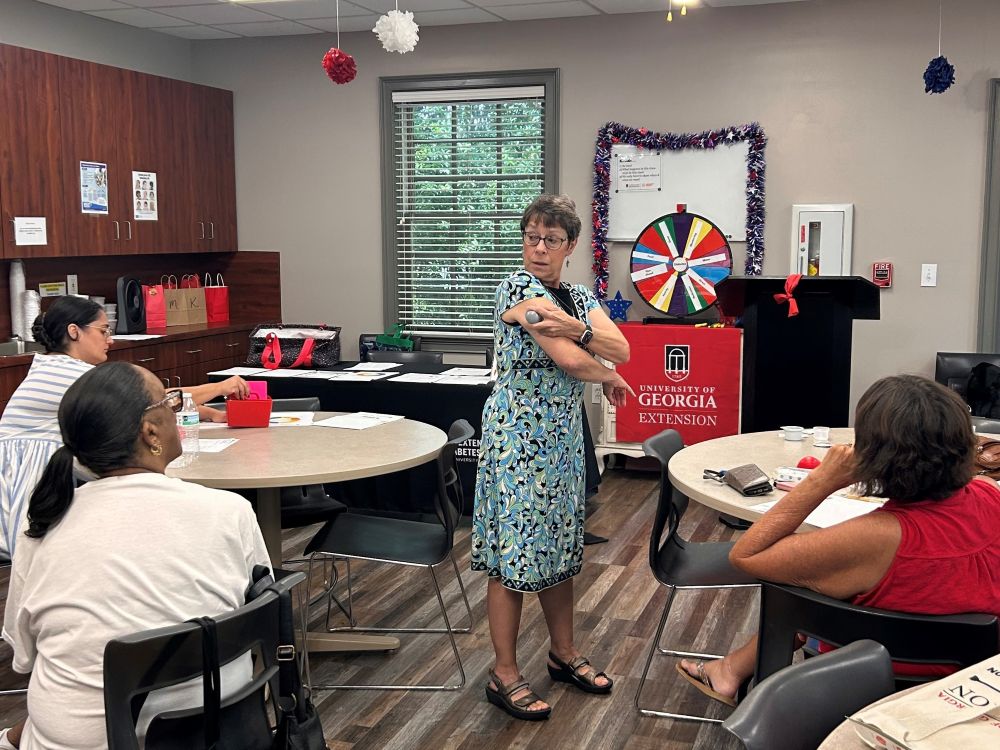
A collaboration between the University of Georgia (UGA) and the Georgia Clinical and Translational Science Alliance (Georgia CTSA) is helping rural Georgians manage their diabetes. The Health Extension for Diabetes (HED) program led by Michelle Parisi, PhD, MS, Associate Professor, College of Family and Consumer Sciences, UGA, leverages the vast UGA Extension network and clinical expertise from certified diabetes specialists to deliver programming aimed at reducing complications from diabetes.
Parisi and Georgia CTSA’s Karen Lindsley, DNP, RN, Emory, connected through the CTSA, a national collaborative consortium funded by the National Institutes of Health, that harnesses the strengths of Emory, Georgia Tech, Morehouse School of Medicine, and UGA, to improve health for Georgians.
The HED program in Georgia is supported by a $5 million grant from the Centers for Disease Control and Prevention. Since the program began, participants have completed the eight Diabetes Self-Management Education and Support sessions, offered for free both online and in-person.
“This diabetes program is demonstrating strong results,” Parisi said. “Georgia participants report increased knowledge, self-confidence, and behaviors of diabetes self-management after participating in the program. Clinical partners like Karen make the program possible. They provide critical support during program delivery, allowing Extension agent facilitators to assist participants while maintaining a clear scope of practice for diabetes intervention.”
A four-month program targets individuals with Type 1 or Type 2 diabetes, which affects approximately 1 million Georgians. The curriculum is structured around seven diabetes self-care behaviors outlined by the Association of Diabetes Care and Education Specialists. UGA Extension agents provide sessions covering nutrition, physical activity, stress management, and community resources, while Lindsley leads sessions on complications, blood glucose monitoring, and medications management.
“Complications are common for people living with diabetes and lead to decreased quality of life and increased healthcare expenses,” Parisi said. “If someone with diabetes can self-manage complications, they can improve their health and quality of life while significantly decreasing healthcare costs related to diabetes.”
Agents in six Georgia counties – Elbert, Monroe, Morgan, Athens-Clarke, Fulton, and Gwinnett – began leading the program in February 2025. An additional nine counties will participate in 2026. UGA Extension agent Ariathni Powell delivered in-person programming to participants at the Morgan County Senior Center last year and recently welcomed a second cohort.
“Most of the new participants came from word of mouth from previous participants,” she said, adding that participants in the original cohort demonstrated a significant increase in self-efficacy after completing the program.
Lindsley provided clinical support to Powell, offering expertise to answer complicated participant questions throughout the four-month program. She also made a special effort to visit Morgan County in-person to talk with participants about glucose monitoring and medications.
“The classes (Powell and Lindsley) taught had a wonderful level of engagement,” said Kiiyanni Humphrey, activities coordinator for the senior center. “Participants did not hesitate to ask questions when they needed clarification or hesitate to share information that they found beneficial. During graduation, I heard participants speak about how they were already implementing changes they learned in their daily lives.”
A new online program will begin in February 2026, and additional in-person and online groups start in Spring 2026. For more information and to sign up for classes, email Michelle Parisi.
Parisi emphasized, “The goal is to offer Health Extension for Diabetes through Extension at land-grant universities in every state to collectively help individuals with diabetes manage their disease and prevent long-term complications.”