Georgia CTSA Prepares the Next Generation of Translational Scientists with New TL1 Trainees
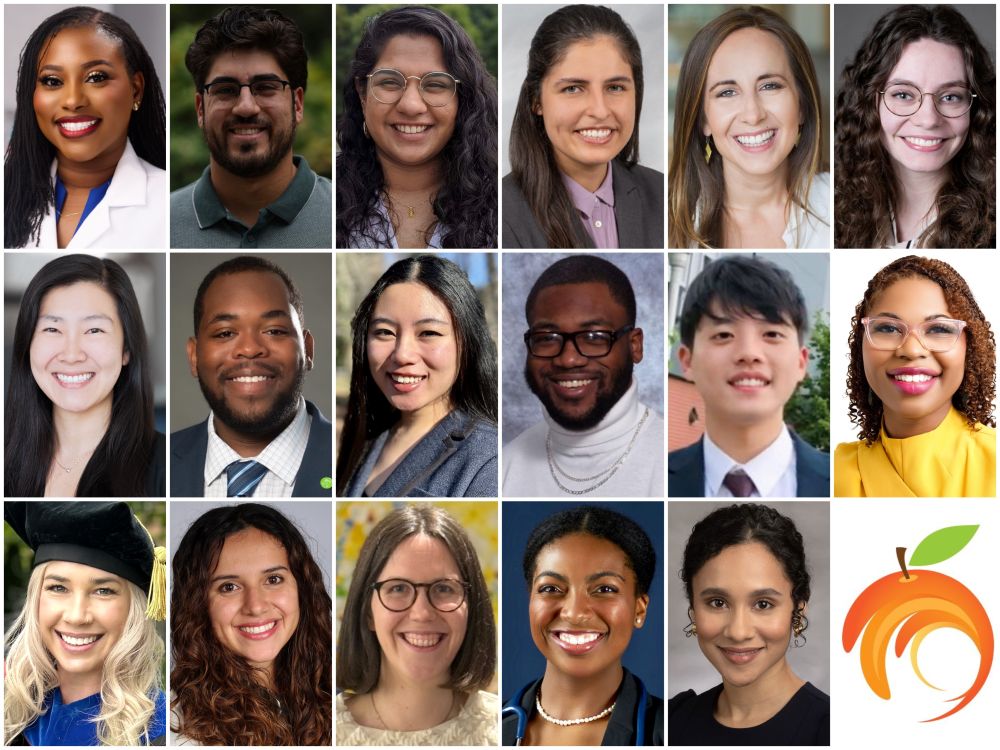
Georgia CTSA is excited to welcome its newest cohort of trainees. The TL1 program supports excellence in clinical and translational science through mentored research training for predoctoral & postdoctoral scholars. Their work will advance scientific discovery and drive meaningful improvements in human health. Applications for the 2027–2028 T32 (formerly TL1) Programs are now open. Register for the Application Workshop on 10/29 and apply by 2/15.
Predoctoral TL1 Trainees
- Eduardo (Ali) Alvarez-Pamir, PhD Student, Emory, Neuroscience
- Aerobic Exercise in Parkinson’s Disease: Examining the influence of Sleep Disorders on Neural Function, Cardiovascular Autonomic Function, and Motor Cognitive Outcomes
- Srinidhi Bharadwaj, MD/PhD Student, Georgia Tech/Emory, Medicine/Biomedical Engineering
- Using quantitative oblique back-illumination microscopy for human brain tumor assessment
- Genevieve Craig, PhD Student, Emory, Neuroscience
- Inflammation Effects on Fear and Anxiety-Related Circuits and Symptoms in Patients with Depression: Role of Dopamine
- John Fuller, PhD Student, Emory, Nursing
- Toward Health Resilience: Intersectional Stigma, Voices of Joy and Empowerment in Anal Cancer Screening Among People Living with HIV in Georgia: The THRIVE-GA Study
- Sophia Garbarino, MPH, PhD Student, Emory, Behavioral, Social, and Health Education Sciences
- Translating evidence to practice: A mixed methods assessment of clinical approaches to address pain during IUD placement
- Patrick Ihejirika, PhD Student, UGA, Biomechanics
- Characterizing Finger Control Coordination for Personalized Hand Rehabilitation Post-Stroke
- Jessica Otero, MPH, PhD Student, Emory, Global Health & Development
- Addressing Maternal Healthcare Fragmentation in Chocó, Colombia Through Mixed-Methods Translational Research
- Olivia Singleton, MD Student, Emory, School of Medicine
- Prognostic Impact of HD TEMRA cells in HPV+ Oropharyngeal Squamous Cell Carcinoma Patients
Postdoctoral TL1 Trainees
- Olufisayo Aloba, DPT, PhD, Postdoctoral Fellow, Emory, Neurology
- A Multimodal Resting-State fMRI and Biomarker Analysis Framework for Precision Diagnosis of Alzheimer’s Disease.
- Lily Bonadonna, MD, Fellow, Emory, Medicine, Infectious Diseases
- Access to the transplant cascade: an analysis of referral rates among people living with HIV in metro-Atlanta
- Melissa Chapnick, PhD, Postdoctoral Fellow, Emory, Global Health
- Early-Life Nutrition and Multi-System Aging Phenotypes: An Unsupervised Machine Learning-Based Approach
- Kaileen Fei, MD, Resident, Emory, Surgery, Vascular Surgery
- Characterizing Longitudinal Clinical Trajectories and Patient-Centered Outcomes in Chronic Limb-Threatening Ischemia: Early Revascularization Versus Wound Care–First Strategies
- Hohyun Lee, PhD, Postdoctoral Fellow, Georgia Tech, Mechanical Engineering
- A Clinically Deployable AI-driven Transcranial Focused Ultrasound for Targeted Drug Delivery in the Brain Tumors
- Isabel Morgan, PhD, Postdoctoral Fellow, Morehouse School of Medicine, Obstetrics and Gynecology
- Disease Burden and Diagnostic Experiences of Gynecologic Conditions in the United States, 2022-2023
- Alissa Oakes, PhD, Postdoctoral Fellow, Emory, Hematology and Medical Oncology
- Decoding Immune Surveillance Failure in Acute Myeloid Leukemia: T cell Clonality, Dysfunction, and Bioinformatic Insights
- Petra Rantanen, MD, Fellow, Emory, Medicine, Cardiology
- Understanding Patient Perceptions of Risk and Communication Preferences in Cardiac Critical Care Comparative Effectiveness Research
- Nahara Vargas-Maldonado, PhD, Postdoctoral Fellow, Emory, Microbiology and Immunology
- Defining host features modulating infectious respiratory particle expulsion in a controlled human infection model: Mechanistic insights to mitigate influenza A virus transmission