Georgia CTSA Clinical Research Centers Enable Innovative Influenza Vaccine Research
Millions of people are infected with influenza each year, leading to around 50,000 deaths annually. The annual flu vaccine provides vital protection against infection, hospitalization, and death. But what if there was a different way to protect against the flu – one that is more effective and convenient for the busy individual?
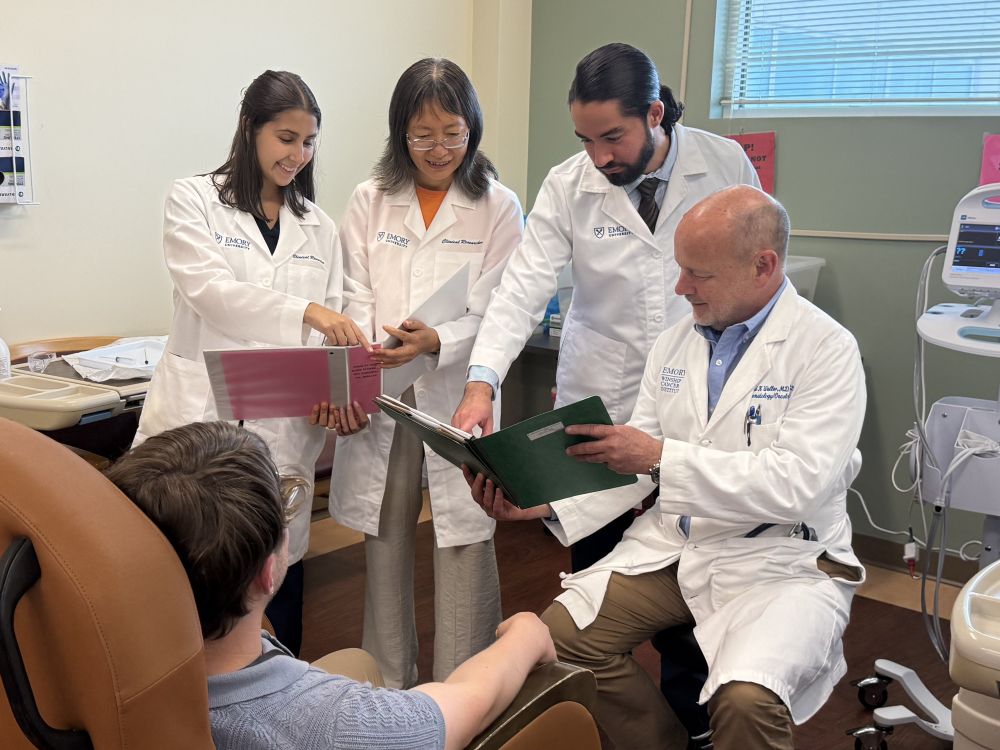
With the operational support and clinical research infrastructure provided by the Georgia CTSA Clinical Research Centers, the study, “Longitudinal Analysis of Bone Marrow and Peripheral Blood Immune Responses to Influenza Vaccination in a Healthy Adult Cohort,” is being conducted by researchers at Emory University to examine why seasonal flu vaccines don’t provide long-term immunity and what can be done to address this question.
About the Study
Participants in this study undergo a bone marrow aspiration before receiving the seasonal flu vaccine. They are monitored for approximately one year after vaccination, during which additional bone marrow aspirations and blood draws are performed. Researchers analyze changes in plasma cells—specialized antibody-producing B cells that migrate to the bone marrow in response to vaccination or infection—to better understand how long-lasting immunity develops after vaccination. Additional blood samples are used for immune cell isolation and analysis of vaccine-induced immune responses. Complete blood counts (CBCs) and other safety tests are performed before each bone marrow aspiration to help ensure it is safe for participants to continue study procedures.
“From a translational perspective, beyond the mechanics of figuring out a better vaccine, we have the opportunity to develop therapeutics out of this project by isolating and characterizing specific immunoglobulin molecules that are protective against the influenza virus,” shares Principal Investigator Edmund K. Waller, MD, PhD.
This study offers the opportunity for healthy individuals to participate in clinical trials, unlike other studies that require a specific diagnosis or certain conditions. Many of the enrollees are Emory community members, including employees and students, with one participant sharing, “I participated in this study because giving back to research benefits the entire world around us.”
Providing Essential Support
The GCRC makes studies like this one possible by providing essential research services, including clinical infrastructure and resources needed to conduct research visits safely and efficiently. This team coordinates participant scheduling, informed consent, specimen collection, and clinical procedures such as blood draws and bone marrow aspirations.
GCRC also provides trained research staff, facilities for participant monitoring, and support for processing and handling biological samples. Through these services, the team helps ensure that study procedures are performed consistently, participant safety is maintained, and high-quality data and specimens are collected for analysis.
Rendy Chaparro, MD, Senior Research Specialist, shares, “Through the steps we take every day, every study we contribute to adds another piece to a larger picture that will help with future approaches to prevention, diagnosis and treatment, ultimately advancing patient care."
Innovation and Impact
The GCRC is proud to support this innovative work that can shape not only the future of flu vaccinations but also provide broader implications for public health.
Dr. Waller remarks, "One of the biggest public health impacts would be developing vaccines that can be given less frequently so that their protection is more durable and potentially more effective because they're acting upon elements of the influenza virion which don't change from year to year. Studies like this one show that we can work together to conduct relatively complex research on human subjects that generates actionable scientific insights.”
“The success of this study reflects the strengths of our team. We are supporting a lot of studies, and those clinical trials really benefit the field, the patient population, and the general society,” says Xu Wang, PhD, Clinical Trials Manager.
Drew Siskin, Clinical Research Coordinator, speaks to the emotional impact of this work, "I hope that people take away from learning a bit about this study a feeling of inspiration and a beacon of positivity, hope, and advancement.”
About Georgia CTSA Clinical Research Centers
Georgia CTSA Clinical Research Centers (GCRCs) are Georgia CTSA’s multi-site clinical research infrastructure, providing investigators with coordinator services, nursing support, a core laboratory, and dedicated inpatient/outpatient research space, plus the regulatory and operational expertise needed to launch and sustain complex clinical trials. By pairing experienced staff with proven processes, the GCRCs help teams translate innovative ideas into studies that run smoothly and improve patient care.